Introduction: The global financial system is accelerating.
Markets move in milliseconds. Liquidity shifts in seconds. Regulations evolve rapidly. Yet in many firms, post-trade operations still rely on fragmented systems, manual reconciliation, and reactive exception handling.
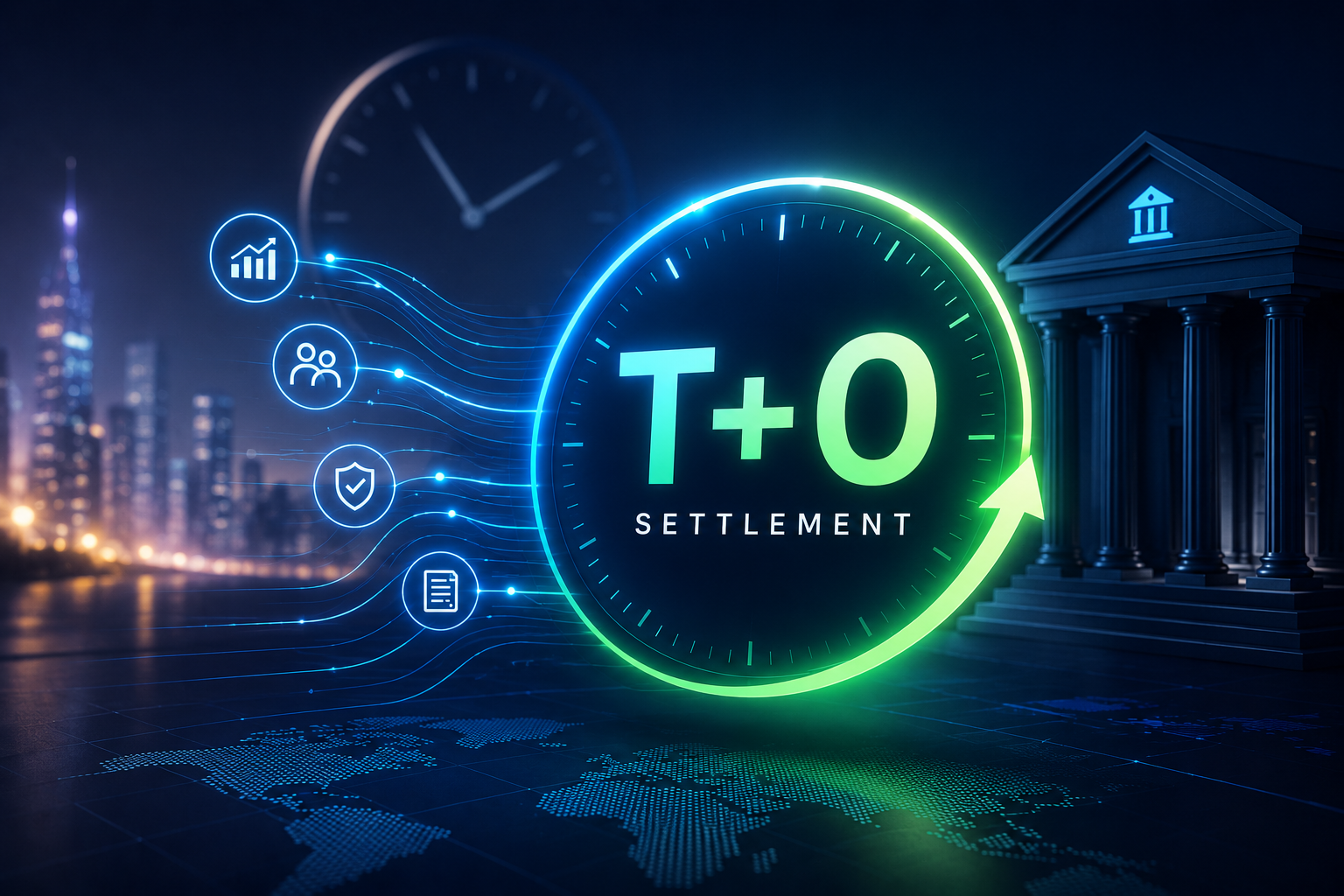
As the industry transitions to T+1 settlement cycles — and increasingly prepares for T+0 environments — operational resilience is no longer optional. It is essential.
This shift is not just about speed. It is about control, visibility, and trust.
What Is T+1 Settlement and Why Does It Matter?
T+1 settlement means that a trade must settle one business day after execution (Trade Date + 1 day). Previously, many markets operated on T+2 cycles.
This compressed timeline creates significant operational pressure:
• Less time to match and affirm trades
• Less room to resolve exceptions
• Increased exposure to settlement fails
• Higher regulatory scrutiny
• Greater penalty risk (CSDR, TMPG)
For global financial institutions, the margin for error has narrowed considerably.
The Hidden Risk: Reactive Exception Management
Many firms still manage post-trade operations by focusing only on failed trades.
However, by the time a trade fails, the damage is already done:
• Capital is tied up
• Counterparty confidence weakens
• Penalties may apply
• Operational teams shift into reactive mode
In compressed settlement cycles, reactive management is simply too late. The future belongs to proactive post-trade control.
What Does Proactive Post-Trade Management Mean?
A proactive approach includes:
• Managing all pending trades, not just breaks
• Identifying high-risk trades at T-0
• Monitoring inventory mismatches in real time
• Forecasting penalty exposure before it occurs
• Automating resolution workflows
This shift transforms post-trade from a cost center into a strategic advantage.
Why Global Institutions Are Re-Evaluating Infrastructure
Across buy-side firms, asset managers, custodians, and broker-dealers, leadership teams are asking:
• Do we have real-time visibility into trade status?
• Can we forecast settlement risk before exposure?
• Are we prepared for global regulatory convergence?
• Can our systems scale during peak volumes?
• Is our data normalized across counterparties?
These are not merely technical questions — they are strategic ones.
The Role of Intelligent Automation in Post-Trade Settlement
Modern post-trade platforms are evolving beyond static reconciliation tools. They integrate:
• Trade matching
• Affirmation workflows
• Inventory management
• Exception prioritization
• Regulatory readiness
• Audit trail storage
• Counterparty connectivity (SWIFT, CTM, FIX networks)
Advanced platforms leverage AI-driven exception management to identify risk patterns across counterparties and asset classes before settlement deadlines approach. This allows firms to move from reaction to prevention.
Regulatory Pressure Is Increasing
Global markets are aligning toward:
• Shorter settlement cycles
• Stricter reporting requirements
• Penalty forecasting (CSDR, TMPG)
• Greater auditability
Firms must maintain detailed logs, normalized trade data, and long-term storage capabilities. The cost of non-compliance is no longer theoretical — it is measurable.
The Future of Post-Trade Settlement
The next generation of infrastructure will:
• Support T+1 and T+0 environments
• Provide predictive analytics for settlement risk
• Automate cross-system communication
• Integrate seamlessly with OMS and portfolio systems
• Reduce manual intervention dramatically
• Deliver measurable ROI
Post-trade will no longer be a back-office burden. It will become a strategic control center.
Frequently Asked Questions
How can firms reduce trade settlement risk in T+1 environments?
By implementing automated, real-time exception management systems that monitor all pending trades and identify risk at trade date (T-0).
What causes most trade settlement failures?
Common causes include inventory mismatches, delayed affirmations, counterparty miscommunication, and manual processing errors.
Is automation necessary for post-trade operations?
In compressed settlement cycles like T+1, automation is essential to manage speed, volume, and regulatory complexity.
How does AI improve post-trade processing?
AI prioritizes exceptions based on risk exposure, inventory data, and counterparty behavior, enabling faster and smarter resolution.
A Defining Moment for the Industry
The shift to T+1 is not just an operational adjustment.
It is a signal that global markets demand greater speed, transparency, and control.
Firms that modernize their post-trade infrastructure now will define the next era of financial operations.
The future of global markets depends not just on trade execution — but on what happens after the trade.
And that future is being defined today.